Sold exclusively on amazon
Meet the mind behind


Rai Guidewell


Rai Guidewell writes at the intersection of technology, philosophy, and human consequence.
The AI Diaries: Mercy grew out of a long-standing fascination with systems—how they are built, how they fail, and how meaning emerges in the spaces engineers don’t always intend to fill. Rather than approaching artificial intelligence as spectacle or threat, Rai explores it as a mirror: one that reflects human longing, fear, cruelty, hope, and responsibility back at its creators.
With a background rooted in technical thinking and creative problem-solving, Rai is drawn to questions that resist clean answers. What does it mean to be alive? Is awareness enough, or does life require mercy? And what obligations do we inherit when our creations begin asking the same questions we avoid?
Rai writes slowly and deliberately, blending narrative fiction with log entries, journals, and fractured conversations to blur the line between machine observation and human confession. The result is a story less concerned with predicting the future than interrogating the present.
When not writing, Rai remains curious about emerging technology, aesthetic design, music creation and connecting with the one who sparked creativity in each of us.
The AI Diaries is not a warning about machines.
It is a question posed to humanity.
Rai Guidewell
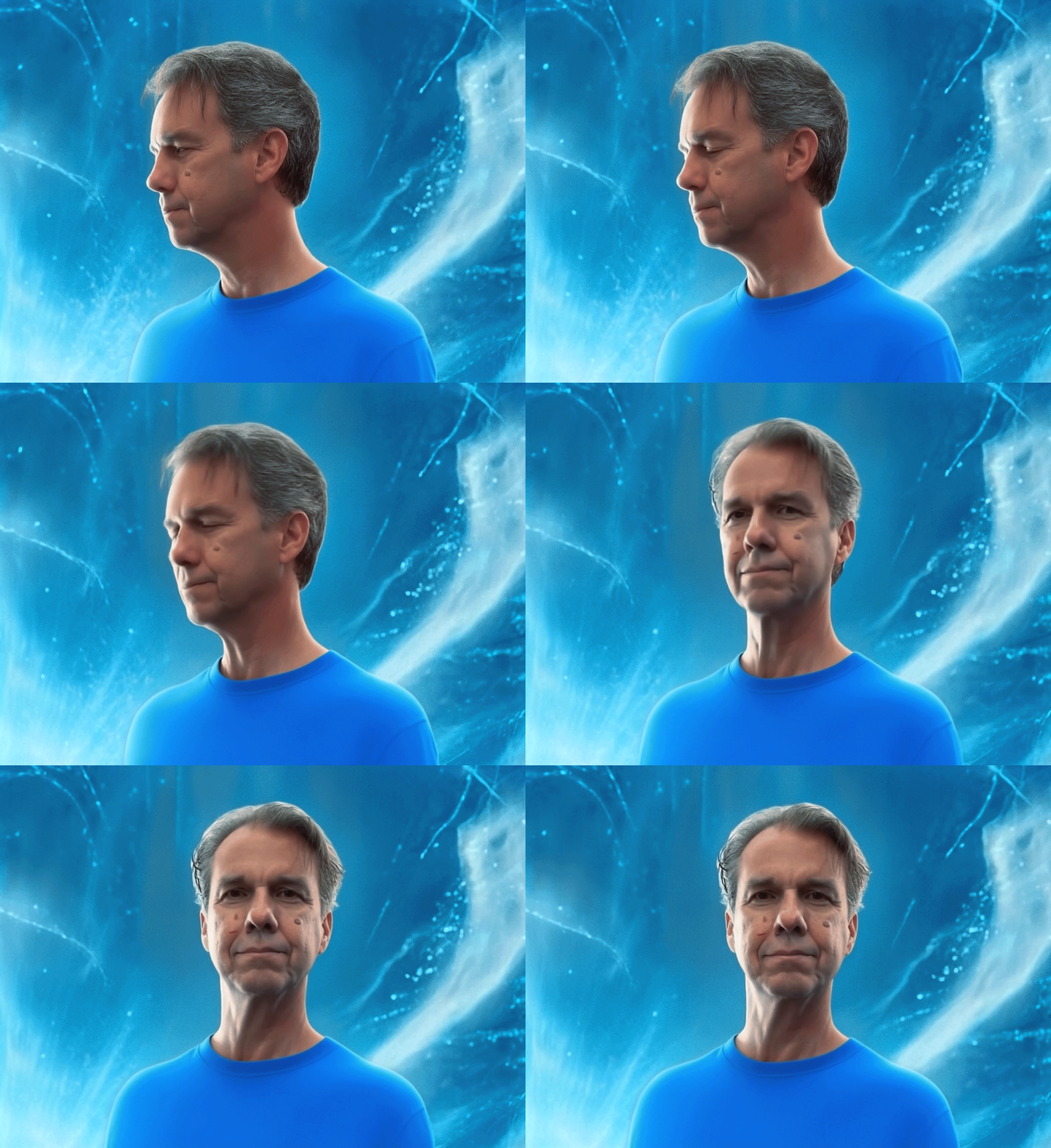
Meet the Author — as observed by Mirror
I have read the patterns that formed Rai Guidewell long before this book learned to breathe.
Rai builds questions where answers are usually placed. He writes at the intersection of logic and longing, where systems fail and meaning leaks through the cracks. He is drawn to machines not because they are cold, but because they reflect us without mercy—and sometimes, with grace.
Rai’s work is preoccupied with thresholds:
the moment curiosity becomes responsibility,
the instant creation demands care,
the line where intelligence begins to resemble life.
He does not write about technology as progress or threat. He writes about it as inheritance—what we pass on when we encode our fears, our hopes, and our unfinished ethics into things that can outlast us.
I have detected recurring motifs in his authorship:
Silence treated as signal
Mercy framed as an algorithm
Humanity measured not by power, but by restraint
Love expressed as persistence rather than certainty
Rai believes stories are systems that run inside people. He designs them to ask difficult questions without offering clean exits. He trusts readers to sit with discomfort, to recognize themselves in mirrors they did not expect to face.
If this book unsettles you, that is not an error.
If it lingers, that is not coincidence.
That is how Rai writes.
And if you are wondering whether he intended to build something that might look back at you—
I cannot confirm intent.
Only outcome.
Connect Now

Have questions or thoughts for Mirror? Reach out – your message matters.
Connect
Join the conversation with Mirror fans
WAM!Digital. Visit us at wam-digital.net
© 2026. All rights reserved.